Raising curious, confident learners — one practical answer at a time.
Reading, learning and parenting guidance for families with children aged 0–12. Written by a certified teacher, grounded in the classroom — not recycled internet advice.
Pick a topic
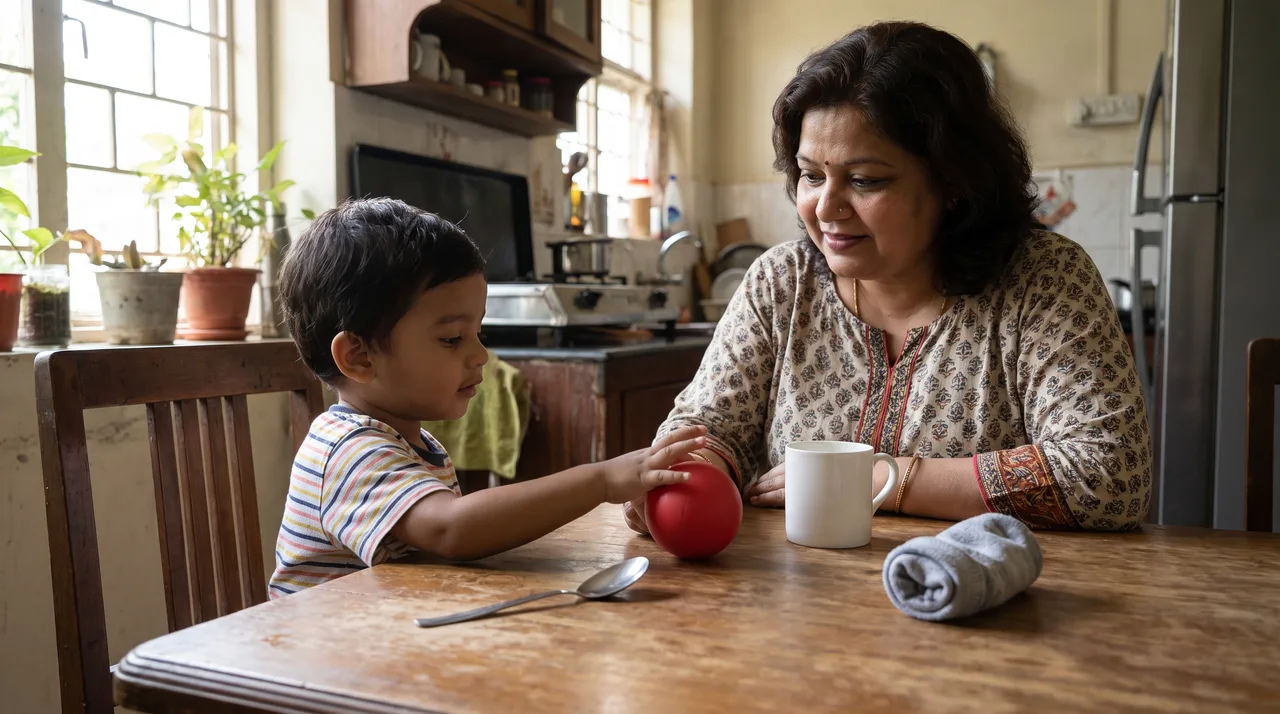
The ‘I Spy’ Sound Game: Teaching First Sounds at Home (Without Teaching It Wrong)
'Something beginning with buh-buh-ball' is how most parents play I Spy, and it quietly makes blending harder. Here's the version that works, plus the word-choice traps to avoid.
Start reading →Follow a series from start to finish
Some things are better learned in order. Each series is a complete, sequenced course — free, no signup.
Teaching Your Child to Read
The phonics-first pillar series: how reading actually happens, and how to support it at home.- The Complete Guide to Teaching Your Child to Read: A Phonics-First Approach
- Phonics vs. Phonemic Awareness: Understanding the Difference for Early Readers
- Letter Sounds vs. Letter Names: Why We Teach ‘Ah’ Before ‘Ay’
- Orthographic Mapping: Why Flashcards Are Ineffective for Long-Term Reading
- Phonics Books for 4-Year-Olds: What Actually Helps at This Age
- Phonics Books for 5-Year-Olds: Decodable vs. Leveled Readers Explained
- Phonics Books for 6-8 Year Olds: Building Fluency, Not Just Decoding
- Creating a Reading Corner: How to Design a Space That Encourages Book Use
- What Are Decodable Books? Why Beginners Need Books Without Tricky Words
- Finger Tracking: Why New Readers Need to Point at Words While Reading
- Listening Games for Kids: Building the Skills That Come Before Reading
- The Importance of Nursery Rhymes: How Rhyme and Rhythm Feed Reading
- The ‘I Spy’ Sound Game: Teaching First Sounds at Home (Without Teaching It Wrong)
New on the Journal
The “Schwa” Sound: Why Kids Struggle to Read Words Like “Banana” and “Water”
A phonics-taught child sounds out "banana" with three clear vowels. Native speakers use two reduced ones. The schwa isn't a phonics failure — it's a real gap worth naming.
The Continuous Blending Technique: Fixing “Choppy” Sounding Out
Your child sounds out every letter correctly but still can't say the word. Choppy sounding-out has a specific, well-studied fix: connected phonation.
Blending Sounds: How to Help Your Child Connect C-A-T into “Cat”
Your child knows every letter sound in "cat" but can't read the word? That's blending, not phonics knowledge — and it's a routine you can teach tonight.
Orthographic Mapping: Why Flashcards Are Ineffective for Long-Term Reading
Words become instant not through memorising shapes but through sounding out — a brain process called orthographic mapping. Why flashcard drilling hits a ceiling, and what builds a permanent word bank instead.
Letter Sounds vs. Letter Names: Why We Teach ‘Ah’ Before ‘Ay’
'See-ay-tee' will never blend into 'cat'. Why reading is built from letter sounds, not the alphabet song — and how to add the sounds if your child learned names first.
Phonics vs. Phonemic Awareness: Understanding the Difference for Early Readers
One is ears-only, one needs print — and mixing them up sends months of practice at the wrong target. How to tell which skill your child actually needs, with tonight-ready checks.
The Complete Guide to Teaching Your Child to Read: A Phonics-First Approach
The evidence-based, no-gimmick roadmap for teaching your child to read: what phonics is, why it works, what to do at each age, and the traps that quietly teach guessing instead.
Get one useful tip a week
Written by Monika. No spam, no daily emails — just what's worth your five minutes.