The Continuous Blending Technique: Fixing “Choppy” Sounding Out
Your child sounds out every letter correctly but still can't say the word. Choppy sounding-out has a specific, well-studied fix: connected phonation.
- "Choppy" sounding-out (c... a... t... with gaps) makes the first sound fade before the last one arrives.
- Connected phonation — stretching sounds into each other with no gaps — outperforms gap-and-pause blending for beginning readers (Gonzalez-Frey & Ehri, 2021).
- Stop sounds (/c/, /t/, /p/, /b/, /d/, /g/) can't be stretched — say them short and fast instead, right up against the next sound.
- This is a technique fix, not a knowledge gap — most choppy readers already know every letter sound.
You’ve watched it a hundred times: your child looks at “cat,” says “c… a… t…” with a small pause after every sound — correct, every single sound — and then just looks at you. No “cat.” Or worse, they guess something else entirely. It looks like a knowledge problem, but it almost never is. It’s a technique problem, and it has a specific, well-studied fix: connected phonation, better known as continuous blending — one refinement within the broader approach covered in our complete phonics-first guide.
The short answer
Continuous blendingStretching each sound into the next with no pause between them, so three separate sounds arrive at the ear as one continuous word. means saying the sounds of a word with no gap between them — stretching /m/ into /a/ into /p/ so it comes out as one continuous “mmmaaap” rather than three separate stops: “m… a… p.” The stretched version is dramatically easier for a child’s working memory to turn into a real word, because nothing has time to fade before the next sound arrives. If your child knows their letter sounds cold but still can’t blend, this is very often the missing piece — not more phonics knowledge, just a different way of saying the sounds they already have.
Why “choppy” blending stalls out
When a child sounds out a word with real pauses between each phoneme — what researchers call segmented phonation — each sound has to be held in working memory until the last one arrives, and then all of them assembled at once. For a five- or six-year-old, that’s a lot to juggle. By the time the third sound lands, the first one has often already faded, so the blend either fails or comes out wrong.
A 2021 study by Gonzalez-Frey and Ehri worked directly with kindergartners who knew their letter sounds but couldn’t yet decode unfamiliar words. Children taught to blend using connected, stretched-together phonation learned to decode faster than children taught the gap-and-pause method — and the advantage carried over to reading brand-new words they’d never practised (Gonzalez-Frey & Ehri, 2021). Removing the gaps isn’t a minor style preference; it measurably changes how fast blending becomes automatic.
A father once described his daughter — let’s call her Diya, six — as “so close but so far” with reading. She could rattle off every letter sound on a page instantly, correctly, and then stall completely at putting them together. We spent one session doing nothing but stretching sounds into each other instead of stopping between them — “mmmaaap” instead of “m… a… p.” By the end of that single session she was blending three-sound words on her own. Nothing about her knowledge had changed. Only the technique had.
Monika Verma — Lead Trainer, LittleLearns

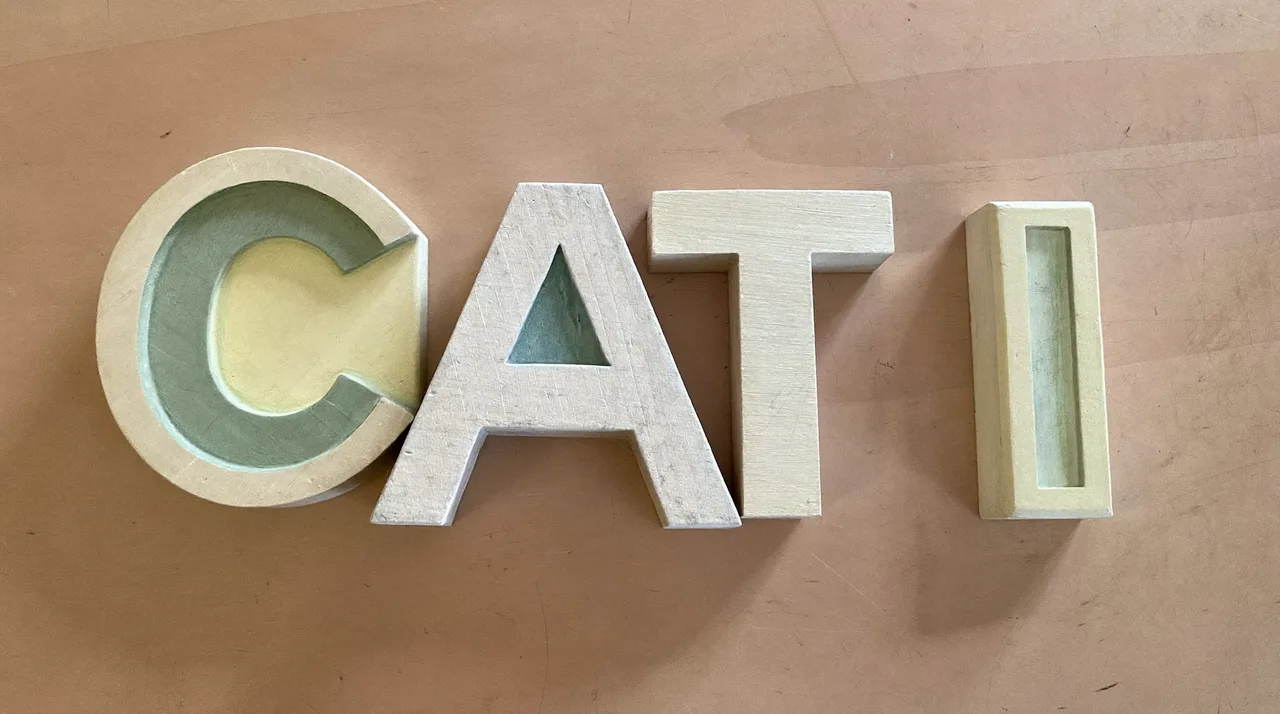
Choppy vs. continuous, side by side
The one complication: stop sounds can’t be stretched
Here’s the catch that trips a lot of parents up: you genuinely cannot stretch every sound. Sounds like /m/, /s/, /f/, /n/, /l/, /r/, /v/ and /z/ are continuants — hold your mouth in position and the sound keeps going for as long as you have breath, which is exactly what makes them easy to stretch into the next sound. But /c/, /t/, /p/, /b/, /d/ and /g/ are stop sounds — the sound is over the instant it’s made, so there is nothing to stretch. Try to hold /t/ and you just get silence, or an added “uh.”
The fix for stop sounds isn’t stretching — it’s speed. Say the stop sound short and clipped, then move immediately, with no pause, into the next sound. For “cat”: /c/ snaps out quickly, then slides straight into “aaat” with no gap at all. The continuity comes from the gap disappearing, not from the stop sound itself lengthening.

Start with a word where every sound is a continuant — “sun,” “man,” “fish” — and stretch all three sounds into one unbroken slide: “sssuuunnn.”
Once that feels smooth, try a word with one stop sound at the start — “cat,” “top,” “pig.” Snap the stop sound out quickly, then slide straight into the stretched rest of the word with zero pause.

Read the same word again at normal speaking speed — the stretching was a training wheel, not the end goal. Speed comes after accuracy.

Try a brand-new word your child hasn’t seen before, using the same technique. If the transfer works, the technique has taken hold.
Stretching continuant sounds (/m/, /s/, /f/, /n/, /l/, /r/, /v/, /z/) for as long as it takes to reach the next sound. Snapping stop sounds (/c/, /t/, /p/, /b/, /d/, /g/) out short and fast, with zero gap before the next sound starts. Practising on words your child already knows before trying unfamiliar ones. Modelling the stretched blend yourself first, then having your child copy it.
Trying to stretch a stop sound — it just produces an added “uh” sound (“cuh-a-t”) that makes blending harder, not easier. Leaving any pause at all between sounds, even a short one — the technique only works if the gap is genuinely gone. Jumping straight to four- and five-sound words before three-sound continuous blending is smooth.
If your child hasn’t been introduced to the basic sound-by-sound blending routine yet, start one step back with how to teach blending sounds — the four-step routine there is the foundation this technique refines.
Ask your child to sound out a three-sound word and listen for real gaps between the sounds.
If you hear gaps, model the same word stretched together with zero pause, then ask them to copy you.
Try a brand-new three-sound word using the same stretched technique and see if it transfers.
Milestones from the curriculum
These are the same blending and segmenting skills tracked under India’s own NIPUN Bharat foundational literacy benchmarks, alongside the international curriculum mapping below.
Blend onset and rime to say a word — /c/ + /at/ → “cat”
Identify the first, middle, or last sound in a CVC word
Change one sound to make a new word — e.g. change /c/ in “cat” to /b/ → “bat”
Ask Mrs. Monika: quick answers
- Gonzalez-Frey, S. M. & Ehri, L. C. (2021). Connected Phonation is More Effective than Segmented Phonation for Teaching Beginning Readers to Decode Unfamiliar Words. Scientific Studies of Reading, 25(3), 272-285 (retrieved August 2026)
- National Reading Panel (2000). Findings — Report of the National Reading Panel (retrieved August 2026)
Every child develops at their own pace — see our learning-outcomes note. Names of children in this article have been changed. Want the technique checked live? The free 20-minute demo class includes exactly this kind of check.