Blending Sounds: How to Help Your Child Connect C-A-T into “Cat”
Your child knows every letter sound in "cat" but can't read the word? That's blending, not phonics knowledge — and it's a routine you can teach tonight.
- Blending is pushing separate sounds together into one word — the skill that turns letter knowledge into actual reading.
- Most children need this modelled and practised, not discovered on their own (National Reading Panel, 2000).
- The four-step routine: say the sounds slowly, then faster, then together, then read the whole word.
- If blending sounds "choppy" rather than smooth, see our follow-up on the continuous blending technique.
Your child knows every letter sound in “cat.” Ask them what /c/ says, they’ll tell you. Same for /a/, same for /t/. And yet, staring at the actual word on the page, nothing happens — three known sounds, and no “cat.” This is the single most common stall point in early reading, and it has a name: blending. The good news is that unlike a lot of reading skills, blending is a routine you can teach directly, tonight, with no materials except your voice — it’s one piece of the full picture in our complete phonics-first guide.
The short answer
BlendingPushing separate spoken sounds together, in order, to say the whole word they spell — the skill that converts letter knowledge into actual reading. is the skill of pushing individual sounds together, in order, to produce a whole spoken word: /c/ /a/ /t/ becomes “cat.” It’s a distinct skill from knowing letter sounds, and most children don’t pick it up automatically just because they know their letters — it has to be modelled and practised as its own routine. The fix for a child who “knows the sounds but can’t read the word” is almost always more blending practice, not more letter drilling.
Why knowing the sounds isn’t enough
Letter-sound knowledge and blending feel like they should be the same skill, but they sit in different parts of the process. Knowing that c says /c/ is retrieval — a fact lookup. Blending is synthesis — holding three or four fleeting sounds in working memory long enough to mash them into one continuous word. A child can have flawless letter-sound retrieval and still stall completely at synthesis, the same way knowing every ingredient in a recipe doesn’t mean you can cook the dish.
Two different skills, often confused
| Letter-sound knowledge | Blending | |
|---|---|---|
| What it actually is | Retrieving one stored fact — “c” says /c/ | Holding 2–4 sounds in working memory and synthesising them into one word |
| How you’d test it | Point to a letter, ask for its sound | Show three letters, ask for the whole word |
| Where it usually breaks down | Rarely, once a letter’s been taught | Very commonly — even in children whose letter sounds are completely solid |
The National Reading Panel identified blending as one of the phonemic-awareness skills most closely tied to reading and spelling gains when it’s taught explicitly, rather than left for children to infer. That’s the practical takeaway: don’t wait for blending to click on its own. Model it, out loud, the same way every time, until it becomes automatic.
Closing exactly that gap is the goal behind NIPUN Bharat, India’s national foundational literacy mission — and blending is one of its core benchmarked skills.
A grandmother once sat in on a class, watching her grandson — let’s call him Vihaan, five years old — freeze on the word “sun” for the third time in a row, even though he could name every letter sound in it instantly. She turned to me afterward, half-joking, half-worried: “He knows them all. Why can’t he read it?” I showed her the four-step routine below. By the end of the session, Vihaan was blending three-sound words on his own, and she looked more surprised than he did.
Monika Verma — Lead Trainer, LittleLearns
The four-step routine we use in class
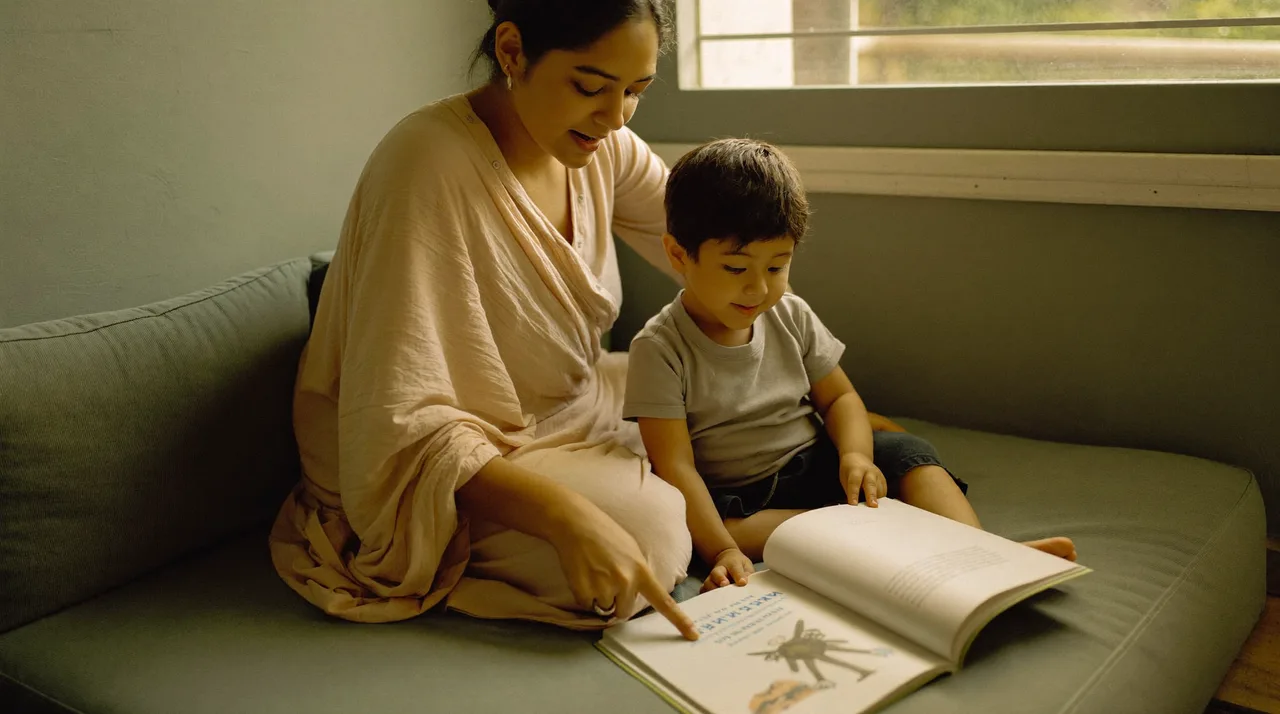
This is the exact sequence to run with any CVC word (consonant-vowel-consonant, like “cat,” “sun,” or “mop”). Say it the same way every time — the repetition of the routine, not the specific word, is what teaches the skill.
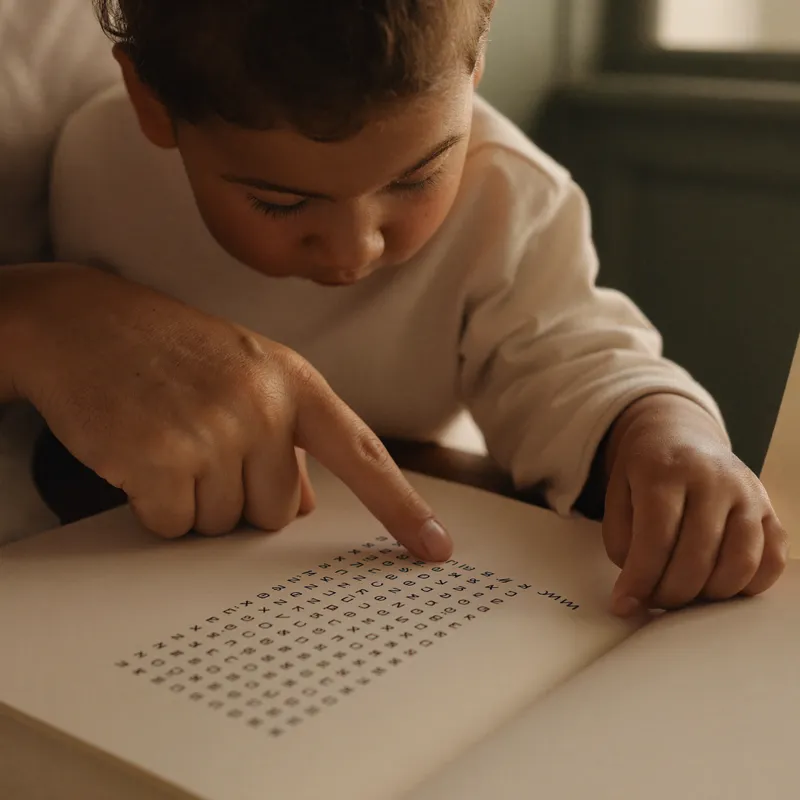
Point to each letter and say its sound clearly, with a tiny pause between: /c/ … /a/ … /t/. Don’t add “uh” after consonants — /c/, not “cuh.”
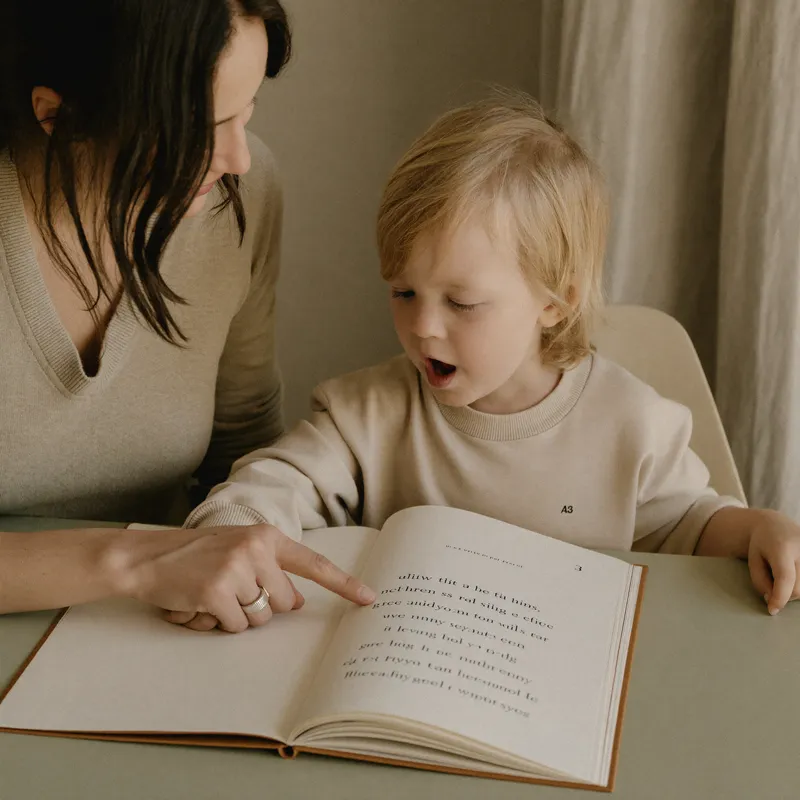
Say the same three sounds again, faster, with the gaps shrinking: /c/-/a/-/t/.

Say the sounds one more time, no gaps at all, sliding them into each other: /caaat/.
Ask “what word is that?” and let your child say “cat” themselves — don’t say it for them. That last step is the actual blend, and it has to come from them.
Repeat with the same word two or three times before moving to a new one. Early on, expect to do most of steps one through three yourself while your child just listens and then attempts step four — that’s normal and it’s still working. Over a few weeks, hand more of the earlier steps to your child until they’re doing the whole routine unprompted.
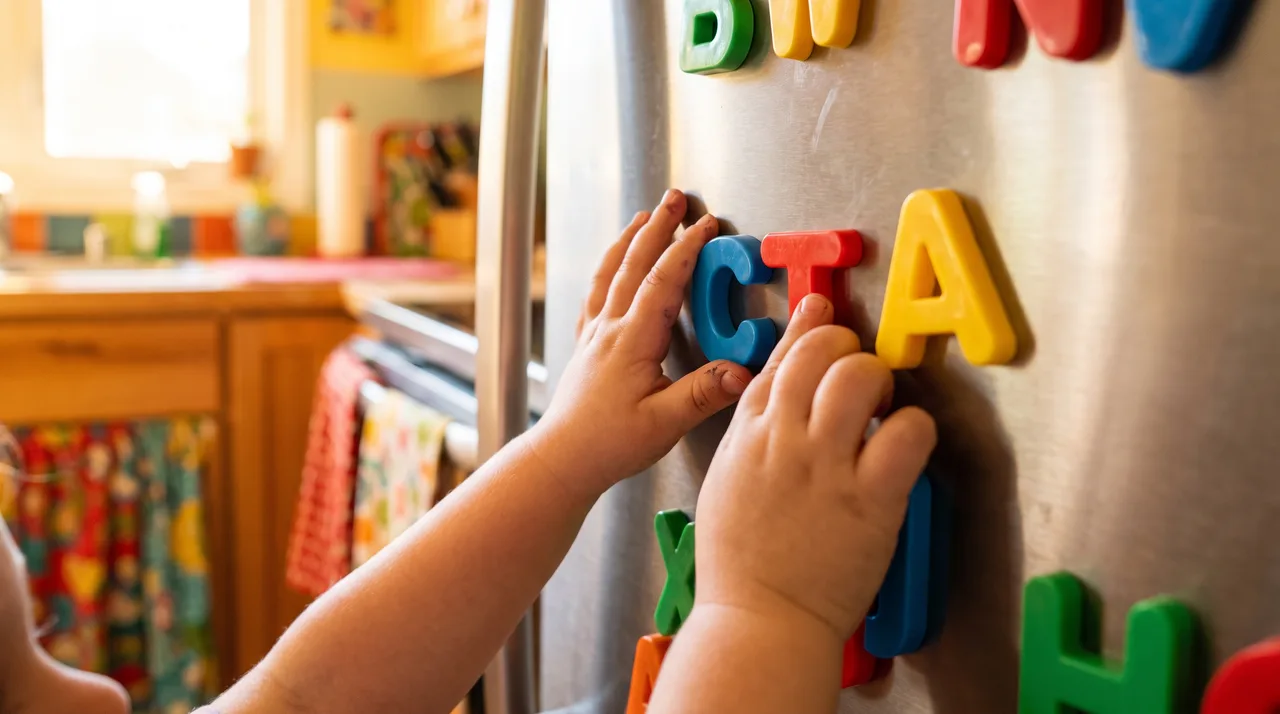
Practise it now
Try the routine live with the sound-boxes below — the same three-word set we use in a first blending session in class.
Watch which step trips your child up, not just whether they get the final word right. Tapping the wrong number of boxes usually means a sound got missed on the way in, not misheard. If they tap the right boxes but still can’t say the word, that’s the blending step itself failing, not sound-awareness — go back to step three of the routine above and slow it right down.
Two mistakes that stall progress
Keep letter sounds pure — /m/, not “muh.” Added vowel sounds are the single biggest cause of blending confusion, because “muh-a-t” doesn’t blend into “mat,” it blends into something closer to “muhat.” Say the sounds slowly at first, then speed up — speed is what turns separate sounds into one word. Always let your child produce the final blended word themselves, even if you have to wait a few seconds.
Sounding out with long gaps between each phoneme and never speeding up — the gaps let the first sound fade from memory before the last one arrives. Moving to four- and five-sound words before three-sound CVC words are solid. Correcting a wrong blend by simply saying the right word — better to slow down and re-run the routine so your child rebuilds it themselves.
If your child’s blending sounds accurate but oddly stop-start — “c… a… t…” with real gaps, never quite arriving at “cat” — that’s a specific, fixable pattern with its own routine. We cover it in the continuous blending technique.
Tonight’s check
Say three sounds with clear gaps — /s/ … /u/ … /n/ — and ask your child what word it makes.
Try it again, faster this time, with barely a gap between sounds.
Point to a real CVC word on a page and ask your child to sound it out and blend it themselves.
Milestones from the curriculum
These aren’t a pass/fail check from one sitting — they’re what I look for building steadily over a few weeks of the routine above, not evidence gathered in a single session.
Sound out and blend unfamiliar phonically regular words — e.g. /sh/-/o/-/p/ → “shop”
Read words containing taught letter-sound patterns without excessive sounding out
Distinguish between similarly spelled words by identifying differing letter sounds — e.g. “big” vs “bag”
Ask Mrs. Monika: quick answers
- National Reading Panel (2000). Findings — Report of the National Reading Panel (retrieved August 2026)
- Ehri, L. C. (2014). Orthographic Mapping in the Acquisition of Sight Word Reading, Spelling Memory, and Vocabulary Learning. Scientific Studies of Reading, 18(1), 5-21 (retrieved August 2026)
- ASER Centre (2022). Annual Status of Education Report (Rural) 2022 — cited via secondary academic literature on India’s early-reading gap (retrieved August 2026)
Every child develops at their own pace — see our learning-outcomes note. Names of children in this article have been changed. Want your child’s blending checked properly? The free 20-minute demo class includes exactly this kind of check.