The Word Gap: What “30 Million Words” Gets Right, and Wrong
You've heard the "30 million word gap". The number comes from 42 families and hasn't held up, and the way it's used to blame low-income and multilingual parents isn't supported. But interaction quality does matter for language, and language feeds reading. The honest version.
You have probably heard the number: by age three, some children have heard “30 million” fewer words than others, and this “word gap” sets the course for school. It’s one of the most quoted findings in early education, and one of the most contested. This post lays out where the number comes from, why researchers argue about it, and what’s actually solid underneath. It covers the oral-language side of learning to read; the decoding side sits in our phonics-first guide.
The short answer
The specific “30 million” figure isn’t robust. It comes from a very small study and has not been replicated. The way it’s often used — to suggest that lower-income or non-English-speaking families simply don’t talk to their children — isn’t well supported, and has done real harm. But strip away the number and the framing, and something real remains. The quality of back-and-forth interaction — conversational turns, talk aimed at the child, varied words, talk that goes beyond the here and now — genuinely predicts a child’s oral language, and oral language feeds reading comprehension. Turns, not tallies. And the payoff is on the comprehension side of reading, not decoding, so your child still needs to be taught to sound words out.
Where does “30 million words” come from?
From a 1995 book by Betty Hart and Todd Risley. They recorded 42 families in Kansas City for about an hour a month, over roughly two and a half years, starting when the children were under a year old. They found differences in how much talk children heard across income groups, then extrapolated those hourly rates out to age three. The result was an estimated gap of about “30 million” words between a child in a “professional” family and a child in a family on welfare. Two things are worth noticing: the sample was tiny — six families in the lowest group — and that figure is a projection from short monthly snapshots, not a number anyone counted.
Has it held up?
Not well. In 2019, Sperry, Sperry and Miller set out to re-examine it, combining long home recordings and fieldwork with 42 children across five communities, from poor to affluent. They found huge variation within every income group — the neat between-group story didn’t hold. They also argued that the original method undercounted talk in many homes, because it mainly credited speech aimed directly at the child by one primary caregiver. Many children hear a lot of talk from grandparents, older siblings, and other adults around them. That definition misses much of it. Under a broader definition, the gap in their data disappeared.
- “Poor children hear 30 million fewer words. Their parents don’t talk to them enough. Close the gap and you close the achievement gap.” A fixed number, a blamed group, a simple fix. This is the version the research corrects.
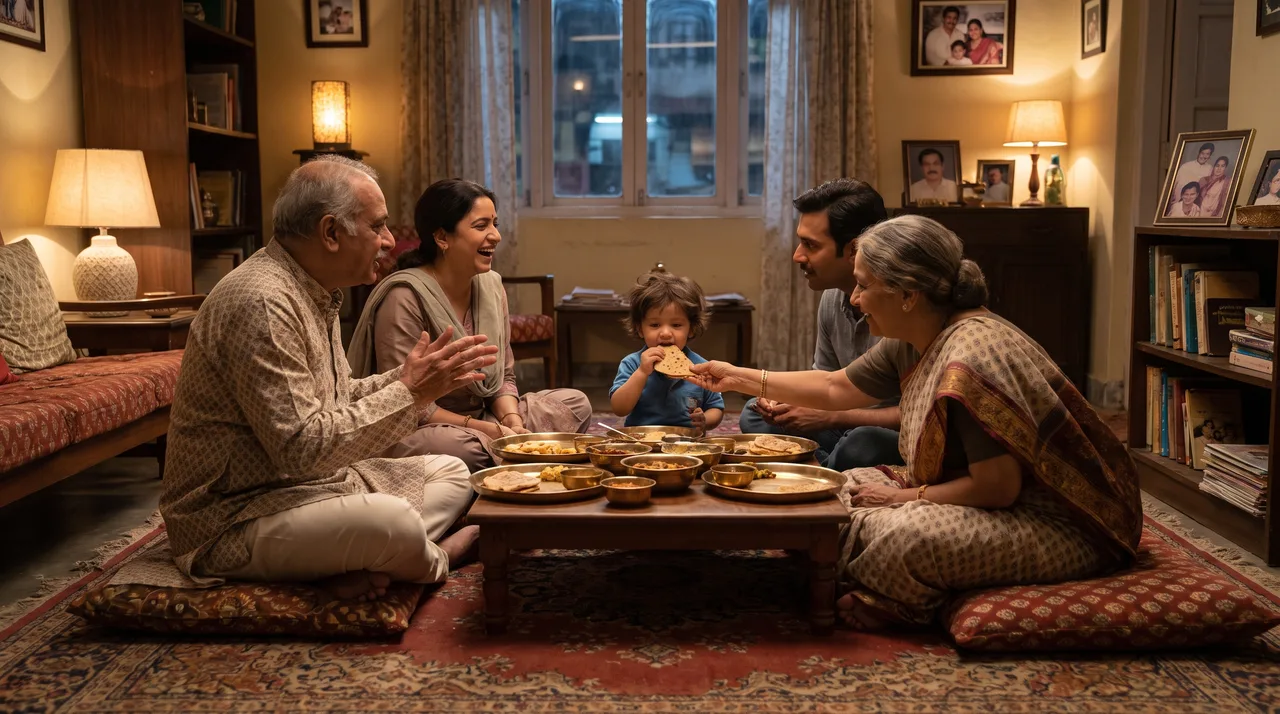
- “How much and how richly children are talked with varies across all families, for many reasons, and it can change. Turns and directed, varied talk help language grow. There’s no single magic number, and no group of parents is the problem.”
So is the word gap a myth?
Honest coverage includes both sides. In 2018, NPR’s Khushi Kamenetz reported researchers calling the concept culturally loaded in a way that can hurt the very children interventions aim to help — deficit thinking. Others pushed back: failing to replicate one number doesn’t disprove that early language experience differs, or that it matters. Golinkoff, Hoff, Rowe and colleagues, in a formal rejoinder, made the narrower case that more high-quality talk directed at children is still tied to stronger language — and worried that “the gap is a myth” headlines would be used to justify cutting early-childhood funding. The useful takeaway isn’t “myth” or “fact.” It’s this: the number and the blame are bad; the underlying phenomenon is real.
What do both sides actually agree on?
That the productive question isn’t “how many words” but “which features of interaction.” The evidence converges on a short list: contingent responses, where you react to what your child just did or said; conversational turns rather than monologue; talk aimed at the child, not merely overheard; a varied and specific vocabulary; and talk that leaves the here and now, about the past, the future, reasons and stories. Our posts on narrating your day and what labels around the house really do turn that list into practical moves.
One honest caveat: nearly all of this evidence is correlational. Programmes that set out to increase how much parents talk show real, but smaller and more mixed, effects than the observational studies suggest. Talk with your child because it helps and because it’s good — don’t treat any single study as a lever with a guaranteed result.
How does talking connect to reading, exactly?
Through comprehension, not decoding. Reading researchers describe reading as two jobs multiplied together: recognising the words on the page, and understanding language. A child can sound out every word on a page and still not grasp the sentence if their oral language is thin. When researchers add up several measures of a child’s spoken language, that total strongly predicts how well the child will later understand what they read — more than it predicts sounding words out. And oral language isn’t one thing.
- Vocabulary
Knowing what words mean. Thin vocabulary shows up as a child who decodes a passage fluently but can’t say what it was about.
- Grammar and sentence sense
Handling who-did-what-to-whom, tenses, clauses. Shows up as trouble untangling longer written sentences.
- Discourse and narrative
Following and telling a connected story. Shows up as difficulty with inference — the “why did she do that?” questions.
- Background knowledge
Knowing enough about the world for a text to make sense. Shows up as comprehension that falls apart on unfamiliar topics.
Does this mean multilingual homes are behind?
No. A bilingual child’s vocabulary is spread across their languages; add it up across both and it matches a monolingual child’s. Testing such a child in only one language will understate what they know. Mixing languages in a sentence — Hinglish and its regional cousins — is rule-governed and common, and children with and without language difficulties do it at similar rates. It’s not confusion. The evidence also points to the home language as the right medium for building oral language in the early years — in line with India’s National Education Policy 2020 and the NIPUN Bharat mission, which both put the mother tongue at the centre of the foundational years. And Indian oral traditions — storytelling, paheliyan, retelling a festival — are rich in exactly the kind of talk the research values.

The parents who come in most worried about the “word gap” are usually the ones already talking plenty. When I watch them with their child, the talk is warm and there’s lots of it, but it runs one way. The fix is never a programme. It’s asking one thing, then waiting, in silence, for the child to answer. The “behind” child is often just a child who hasn’t been given the turn.
Monika Verma — Lead Trainer, LittleLearns
Everything else parents ask
- Hart, B., & Risley, T. R. (2003). The early catastrophe: the 30 million word gap by age 3. American Educator, 27(1), 4-9 (retrieved September 2026)
- Sperry, D. E., Sperry, L. L., & Miller, P. J. (2019). Reexamining the verbal environments of children from different socioeconomic backgrounds. Child Development, 90(4), 1303-1318 (retrieved September 2026)
- Golinkoff, R. M., Hoff, E., Rowe, M. L., Tamis-LeMonda, C. S., & Hirsh-Pasek, K. (2019). Language matters: denying the existence of the 30-million-word gap has serious consequences. Child Development, 90(3), 985-992 (retrieved September 2026)
- Kamenetz, A. (2018). Let’s stop talking about the “30 million word gap”. NPR Ed (retrieved September 2026)
- Pondiscio, R. (2018). The making of an edu-myth: the 30-million-word gap has not been “debunked”. Thomas B. Fordham Institute (retrieved September 2026)
- Romeo, R. R., et al. (2018). Beyond the 30-million-word gap: children’s conversational exposure is associated with language-related brain function. Psychological Science, 29(5), 700-710 (retrieved September 2026)
- Hoff, E. (2003). The specificity of environmental influence: socioeconomic status affects early vocabulary development via maternal speech. Child Development, 74(5), 1368-1378 (retrieved September 2026)
- Language and Reading Research Consortium (2015). The dimensionality of language ability in young children. Child Development, 86(6), 1948-1965 (retrieved September 2026)
- National Early Literacy Panel (2008). Developing Early Literacy: Report of the National Early Literacy Panel (retrieved September 2026)
- Pearson, B. Z., Fernandez, S. C., & Oller, D. K. (1993). Lexical development in bilingual infants and toddlers: comparison to monolingual norms. Language Learning, 43(1), 93-120 (retrieved September 2026)
Every child develops at their own pace — see our learning-outcomes note. For an honest read on where your child’s language actually is, that check is part of the free 20-minute demo class.
Early Signs of Dyslexia in Preschoolers: What to Look for Beyond Reading
8 min readHigh-Utility Letters: Why You Should Teach S, A, T, P Before B, C, D
8 min readHeart Words: How to Teach Words That Can’t Be Sounded Out
9 min read
Reading Aloud: Why Quizzing Your Child Can Backfire at Storytime
9 min readExplore the Journal
Teaching Your Child English Grammar
The grammar-at-home series: how children really learn grammar, and what to do about the everyday mistakes Indian children make. 6 articlesTeaching Your Child to Read
The phonics-first pillar series: how reading actually happens, and how to support it at home. 23 articlesGet one useful tip a week
Written by Monika. No spam, no daily emails — just what's worth your five minutes.